How Much Does AC Installation Cost in Toronto in 2026?
$3,500 to $6,500 for a complete central AC install on most Toronto homes (2–3 ton system, 16 SEER2). Below is the full breakdown by efficiency tier, brand, and what actually moves your final price, from a shop that has been installing central AC in Toronto since 1999.
Quick Answer: Toronto Central AC Costs at a Glance
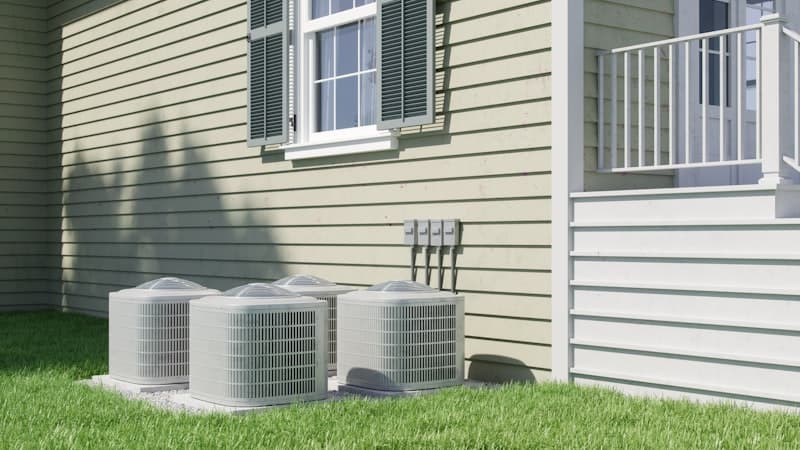
A central AC installation in Toronto costs $3,500 to $6,500 all-in for most homes in 2026 — that's a 2 to 3 ton system, 16 SEER2 efficiency, including equipment, installation, refrigerant line set, electrical work, permits, and removal of the old unit. Larger homes (4+ tons) or premium-efficiency systems (18-21 SEER2) run $5,500 to $8,500. Ductless mini-splits start at $3,000 single-zone and $6,000+ multi-zone. Standalone AC does not qualify for a standard government rebate; ask about our in-house rebates at your quote.
What Actually Decides Your Price
Two houses on the same Toronto street can get quotes $2,000 apart for what looks like the same job. The spread almost never comes from the sticker on the condenser. It comes from four things: how much capacity the house needs, how efficient a system you pick, what condition the existing ductwork and electrical are in, and how much work sits around the equipment itself.
Capacity is first. Cooling load is measured in tons, and every half-ton up is real money in both equipment and labour. A 2-ton system for a 1,200 sq ft semi and a 4-ton system for a Forest Hill detached are different jobs, not the same job at different prices. Load depends on floor area, insulation, window area and orientation, ceiling height, air leakage, and how much of the house you actually cool. Toronto's downtown heat-island effect pushes load up compared to the same house in Whitby, which is one reason square-footage rules of thumb get homes oversized.
Efficiency is second. SEER2 is the rating that matters now, and 14 SEER2 is the floor rather than a bargain. Moving to 16 SEER2 costs a few hundred dollars more up front and cuts cooling electricity by roughly 12 to 15 percent, which for a Toronto household running AC from May through September works out to $80 to $150 a year. Over a 12 to 15 year life that is $1,000 to $2,000, usually more than the price difference. Above 18 SEER2 the payback stretches out, and the reason to go there is usually comfort and noise rather than the hydro bill.
Third is what is already in the house. A straight swap where the ductwork is sound, the electrical panel has room, and the new condenser sits where the old one sat is the cheapest version of this job. Undersized return ducts, a full panel, a condenser that has to move to the other side of the house, or a refrigerant line set that ran R-22 and has to be flushed or replaced all add hours and material. None of that shows up in an online price calculator, which is why phone quotes drift once someone actually looks at the basement.
Fourth is timing. March to mid-May and September to October are the quiet months, so we can usually book within a week and manufacturer promos tend to land then. July and August are the opposite. Lead times stretch to two or three weeks, and an emergency replacement during a heat wave can run 10 to 20 percent higher than the same job booked in spring. If your AC is past twelve years old, replacing it on your schedule is worth real money.
AC Efficiency Tiers and What They Cost
The biggest factor in your AC cost (after sizing) is the SEER2 efficiency rating. Higher SEER2 means lower hydro bills but a higher upfront price. Here's how the three common tiers compare for Toronto homeowners.
14 SEER2 Standard
Minimum-spec system. Reliable but you pay more in hydro long-term. Federal/provincial standards make 14 SEER2 the new baseline.
16 SEER2 Mid-Efficiency
Recommended starting point for Toronto. Roughly 25% lower cooling cost than baseline 14 SEER2 over a typical summer.
18-21 SEER2 High-Efficiency
Variable-speed compressors. Quietest operation. Meaningful payback in larger Toronto homes that run AC 4+ months/year.
AC Brands: Price Comparison for Toronto
We install a wide range of supported brands. As an Authorized Lennox Dealer, we offer competitive pricing on Lennox and Ducane equipment, with Goodman, Fujitsu, and Daikin options available for different homes and budgets.
| Brand | Installed Price | Warranty |
|---|---|---|
| Lennox | $4,200 - $7,500 | 10-yr parts (registered) |
| Goodman | $3,800 - $6,500 | Varies by model and registration |
| Fujitsu | $4,000 - $8,000 | Varies by system and registration |
| Daikin | $4,500 - $8,000 | 12-yr parts (registered) |
| Ducane | $3,500 - $5,500 | 10-yr parts |
The gap between the cheapest and dearest brand on that table is smaller than most homeowners expect, and it is not mostly about whether the unit will cool your house. Every brand listed will do that. What you buy as you move up is a quieter compressor, better performance on the shoulder-season days when a single-stage unit is either full-on or off, and a longer parts warranty if you register the equipment.
We are an Authorized Lennox Dealer, so Lennox and Ducane are what we install most and where we have the best pricing and parts access. That is a real advantage on service years down the road, not just at purchase. Where a home needs something different, a tight side yard that suits a side-discharge Daikin, or an addition with no ductwork that wants a Fujitsu ductless system, we install that instead. Registration matters more than people realise: the same unit can carry a five-year or a ten-year parts warranty depending on whether the paperwork was filed in the first sixty to ninety days. We file it for you.
Total AC Installation Cost Breakdown
When a contractor quotes you a price, make sure all of these line items are included. Reputable Toronto installers (us included) provide all-in pricing with no surprise add-ons.
We don't file government rebate paperwork for customers. Standalone AC has no standard government rebate. For current programs on cold-climate heat pumps, which cool exactly like AC, see homerenovationsavings.ca; homeowners apply to them directly. See the heat pump rebate guide →
The part of the job that is not the air conditioner
Roughly a third to a half of what you pay is everything other than the box outside. It is worth knowing what those lines are, because they are where cheap quotes get cheap.
Labour, $1,000 to $1,800. A straight changeover is four to eight hours for two technicians: pull the old condenser and coil, set the new pad or brackets, fit the evaporator coil in the plenum, braze and pressure-test the connections, pull a proper vacuum, charge the system, and commission it. Rushing the vacuum is the single most common corner-cut in this trade and it shortens compressor life.
Refrigerant line set, $200 to $500. Sometimes the existing line set is fine and gets flushed and reused. If the old system ran R-22, or the line is undersized, kinked, or buried in a finished wall in a way that rules out flushing, it gets replaced, and in a narrow Toronto semi that can mean opening drywall.
Electrical and the ESA disconnect, part of labour and the $150 to $350 permit line. The outdoor unit needs its own correctly sized breaker and a disconnect switch within sight of the condenser. If the panel is full or the existing circuit is undersized for the new unit, that work is real and it belongs on the quote in writing rather than appearing as a surprise on install day.
Permits, $150 to $350, and disposal, $100 to $250. Refrigerant has to be recovered by a certified technician, not vented, and the old unit is taken away and scrapped. A quote that has no permit line usually means no permit is being pulled.
Pad or brackets, $50 to $200, and a thermostat, $0 to $350. Most Toronto installs sit on a composite pad. Wall brackets go up where a side yard floods or drifts, or where a condenser has to clear a walkway. Your existing thermostat often carries over. A two-stage or variable-speed system usually needs a compatible one.
What Size AC for Your Toronto Home?
Sizing is the single most important decision after picking efficiency. Oversized ACs short-cycle and leave your home clammy. Undersized units run constantly without reaching setpoint. We run a Manual J calculation on every estimate.
Toronto semi-detached, condo, narrow row house
Two-storey semi or smaller detached home
Standard Toronto detached home
Larger detached home, Leaside-style
Forest Hill / Rosedale-style estate
Larger estates — separate systems per floor
Treat that table as a starting point, not an answer. It assumes an average Toronto house with average insulation and average window area, and plenty of houses are not average. A 1970s bungalow with blown-in attic insulation and small windows can land a half-ton below the chart. The same footprint with a west-facing wall of glass and an open stair to a finished third floor can land a half-ton above it.
Oversizing is the more common mistake and the more expensive one. An oversized air conditioner cools the air to setpoint fast, shuts off before it has pulled much moisture out, and leaves the house cold and clammy. It also short-cycles, which wears the compressor and costs more to run than the smaller unit would have. Undersizing is easier to spot because the system runs flat out on the worst afternoon of July and still cannot hold setpoint. We run a Manual J load calculation on every estimate and size to the answer.
Three Things Worth Deciding First
1. Whether you want an air conditioner at all
A cold-climate heat pump is an air conditioner that also runs backwards in winter. In cooling it behaves the same way, with the same ducts, the same thermostat, and the same tonnage conversation. The difference is money on both sides of the ledger. A heat pump install runs $5,000 to $14,000 against $3,500 to $6,500 for central AC, so the equipment costs more. But standalone AC has no standard government rebate, while some current government programs cover cold-climate heat pumps.
The homes where this is close to a straightforward call are the ones where the furnace is also near end of life, or where the heat is electric or oil. Replacing both boxes at once with a single system is one install rather than two jobs a few years apart. The homes where a straight AC still wins are the ones with a newer high-efficiency gas furnace that has years left in it, where there is no reason to retire good equipment early. We will tell you which one you are.
Government program details change from time to time. For current programs, which homeowners apply to directly, see homerenovationsavings.ca.
2. How you want to pay for it
Paying outright is the cheapest total cost and the simplest paperwork. You own the equipment on day one and you carry the repair risk after the warranty period, which for a properly installed and maintained system is usually uneventful for the first decade.
The alternative most Toronto homeowners actually use is the Enbridge Sustain lease-to-own program. Nothing down, one fixed monthly payment that covers the equipment, the installation, annual maintenance, every repair, and an extended warranty on parts and labour. The term is 15 years, and at the end of it the equipment is yours outright rather than going back to a rental company. The agreement is transferable if you sell. We are a certified Sustain Trusted Partner and we handle the paperwork. Ask us for the current month's offer and we will put the equipment, the monthly payment, the term length, and the ownership date in writing before you sign anything.
One thing worth being clear about: renting an air conditioner and leasing to own are not the same arrangement. A rental never transfers ownership no matter how long you pay. Compare the two on the ownership line, not the monthly line.
3. How to read three quotes side by side
Get three. Then check that all three are quoting the same job before you compare the totals, because the cheapest number on the page is often the smallest scope. Ask each contractor for the tonnage and the load calculation behind it, the exact indoor and outdoor model numbers as a matched pair, the SEER2 rating of that pair, whether the line set is being reused or replaced, whether a permit and ESA inspection are included, whether removal and disposal of the old unit are included, what the warranty is and who registers it, and what the labour warranty is as distinct from the parts warranty.
A quote that lists an outdoor model but no matched indoor coil is quoting a mismatched system, which will not hit its rated efficiency and can void the warranty. A quote that is $1,500 under the others usually has no permit, a reused line set that should have been replaced, or a tonnage picked off the old nameplate rather than a load calculation. Our quotes are all-in and itemised. If something on ours is missing from theirs, or the other way round, ask about it before you decide.
AC Installation Cost FAQs
How much does it cost to install central AC in Toronto?
What size AC do I need for my Toronto home?
Is 16 SEER2 worth the upgrade over 14 SEER2?
How long does AC installation take?
Are there rebates for AC installation in Ontario?
Should I choose central AC or ductless mini-split?
When is the best time to install central AC in Toronto?
Can I finance a new AC installation?
Get Your Free AC Estimate
We'll come to your home, run a Manual J load calculation, and give you a transparent all-in price. No pressure, no hidden fees.
- Manual J load calculation
- All-inclusive transparent pricing
- Authorized Lennox Dealer
- $0 down lease-to-own option (Enbridge Sustain)
Request a Free Estimate
We respond within 1 business hour.
Our HVAC Services
Service Areas
Helpful Resources
- Furnace Replacement Toronto
- AC Replacement Toronto
- Water Heater Replacement Toronto
- Rent vs Own a Water Heater
- Enbridge Sustain — $0 Down Lease-to-Own
- HVAC Financing Options
- Maintenance Plans
- Furnace Maintenance Checklist
- Furnace Cost Toronto (2026 Guide)
- AC Cost by Size (2, 2.5, 3 Ton)
- Heat Pump Rebates Ontario 2026
- About Megacity HVAC
- Contact Us